
The signal is in the fragments
We analyse cell-free RNA fragments, single-cell and qPCR data for diagnostics companies and research groups, and turn them into biomarkers and results you can publish and act on.
Illustration: RNA fragments sorted by length. A second population, shown in magenta, stands out from the background.
RNA fragmentomics
Cell-free RNA in a blood sample is broken into fragments. How long they are, where they start and end, and the sequence at their ends carry information that expression levels alone miss.
We build the analysis that reads that information: from quality control of sequencing data to fragment profiles, biomarkers and validated predictive models.
- Data analysis partner in a Vinnova-funded pilot – described as Europe’s first RNA fragmentomics study in cancer – with the University of Gothenburg and RealSeq Biosciences.
- Methods built on more than twenty years of work with RNA quantification, single-cell expression and the MIQE guidelines.
- Delivered as a service, or as a pipeline your own team can run.
What we do
Four service areas, each organised as a workflow. Pick the step where you need help, or hand us the whole analysis.
-
RNA fragmentomics
From cell-free RNA sequencing data to fragment-level biomarkers and predictive models.
5 services -
Single-cell, spatial and multiomics
End-to-end analysis of single-cell and spatial transcriptomics, from raw data to biological interpretation.
18 services -
qPCR and dPCR
Assay validation and data analysis from the team behind GenEx and co-authors of the MIQE guidelines.
5 services -
Training and support
Courses and hands-on support for GenEx, DATAN and data analysis in general.
3 services
Why work with MultiD
-
Since 2001
Founded by scientists and software engineers from Swedish universities to make multidimensional data analysis practical.
-
We wrote the guidelines
Our team co-authored the MIQE and digital MIQE guidelines and recommendations for validating qPCR and dPCR assays.
-
Software and service from one team
GenEx and DATAN are used by more than a thousand customers. The people who built them run your analysis.
Selected customers
A selection of more than a thousand customers in academia, pharma and diagnostics.

























Our software
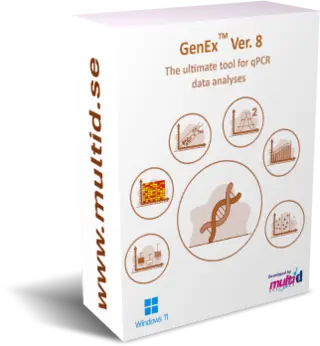
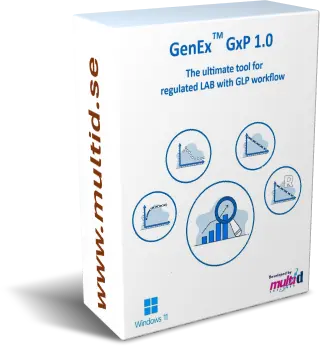
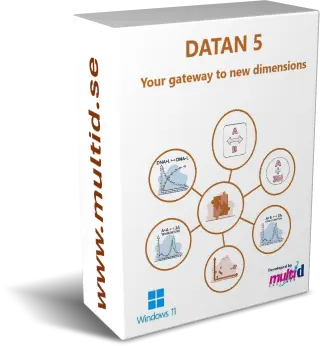
The same methods we use in our services, packaged for your own lab.
Tell us about your data
Describe your samples and your question. We get back to you with how we would approach it.